Chapter XIV
Other Emblems as Explained in “Odd-Fellows’ Text-Book and Manual”
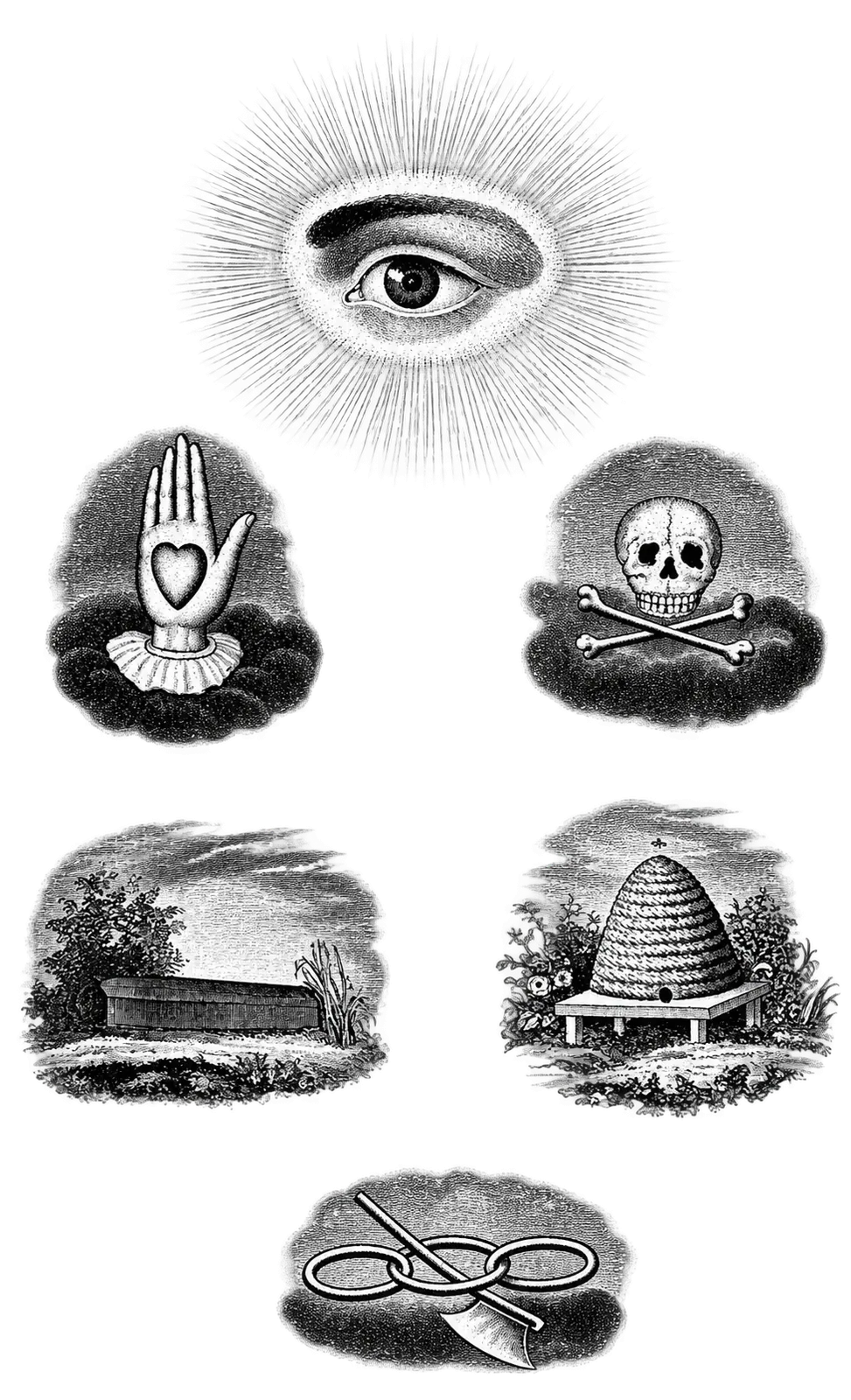
The Eye.—“As Odd-Fellows, let us always remember those expressive words, that cannot be too deeply imprinted on our minds, ‘Thou, God, seest me!’ For the eye of the Lord is in every place, beholding the evil and the good.”
“We may also, in this connection, remind ourselves that ‘a wholesome tongue is a tree of life;’ that the SECRETS we have promised to keep inviolate will never be divulged, except by a man devoid of the principles of honor.”
The Heart and Hand.—“The command of our law is that we visit the sick, relieve the distressed, bury the dead, and educate the orphan. What our hands find to do in these respects, therefore, we should do cheerfully, with the whole heart; not grudgingly and unwillingly. True friendship goes out with alacrity to the service required of it; and heart and hand should go forth in concert in the cause of suffering humanity; they must not be divided in their energies.”
The Coffin, Skull, and Cross-Bones.—“The decree of Heaven is ‘Dust thou art, and unto dust thou shalt return.’ We all await the inevitable hour. What is our life? It is even a vapor, that appeareth for a little time, and then vanisheth away. Where are the myriads of the human family that have lived and figured on earth? They all sleep with their fathers, and the places that once knew them shall know them no more forever. Oh, let us reflect—let us seriously meditate, my brother, on these monitors of ‘what we are sure to be and what we may soon become.’”
The Bee-Hive.—“The industrious man seldom suffers the agony of want. Even though his labors yield him but a trifle, he is content in the knowledge that he is doing what he can to support himself. The idler is an unhappy wretch who drags out a miserable existence. While the sleep of the laborer is sweet and refreshing, that of the idler is restless and unsatisfying. No man can be happy unemployed. No matter how rich he may be he must work if he would not be miserable. This is a law of nature—it can not be successfully resisted. As members of this order, we must LABOR, my brother—if not necessarily for ourselves, then for our fellows.”
The Links and Axe.—“‘Friendship, Love and Truth,’ the motto of our Order—how trite it has become—and how little it is understood and practiced by many who make large professions! Yet what is it? Friendship, Love and Truth, extended towards man by his brother universally, would make of this world a comparative paradise. It would turn aside half the ills that ‘flesh is heir to,’ and produce an amount of happiness that would astonish mankind itself. Friendship, Love and Truth, my brother, is no unmeaning expression. Practice them, and you at least will derive consolation from them. Do not imitate the theorizers, who preach our motto through their presses and from their rostrums, and who have none of its life and spirit; but go out among your brethren, and make them feel that YOU at least are no vainglorious boaster, whose thought is only for the loaves and fishes. Perform the offices of Friendship, Love and Truth—do not merely talk about them.”
The Lamb.—“Innocence is one of the loveliest qualities which adorns human nature. The corrupt laugh at and affect to despise it, but in their hearts they honor it. The temperate, the chaste, the benevolent, and the charitable are beloved by the most abandoned wretches that disgrace humanity. Innocence of wrong-doing commends itself to all, and he who evinces it in his life and conduct may command the confidence of the whole world.”
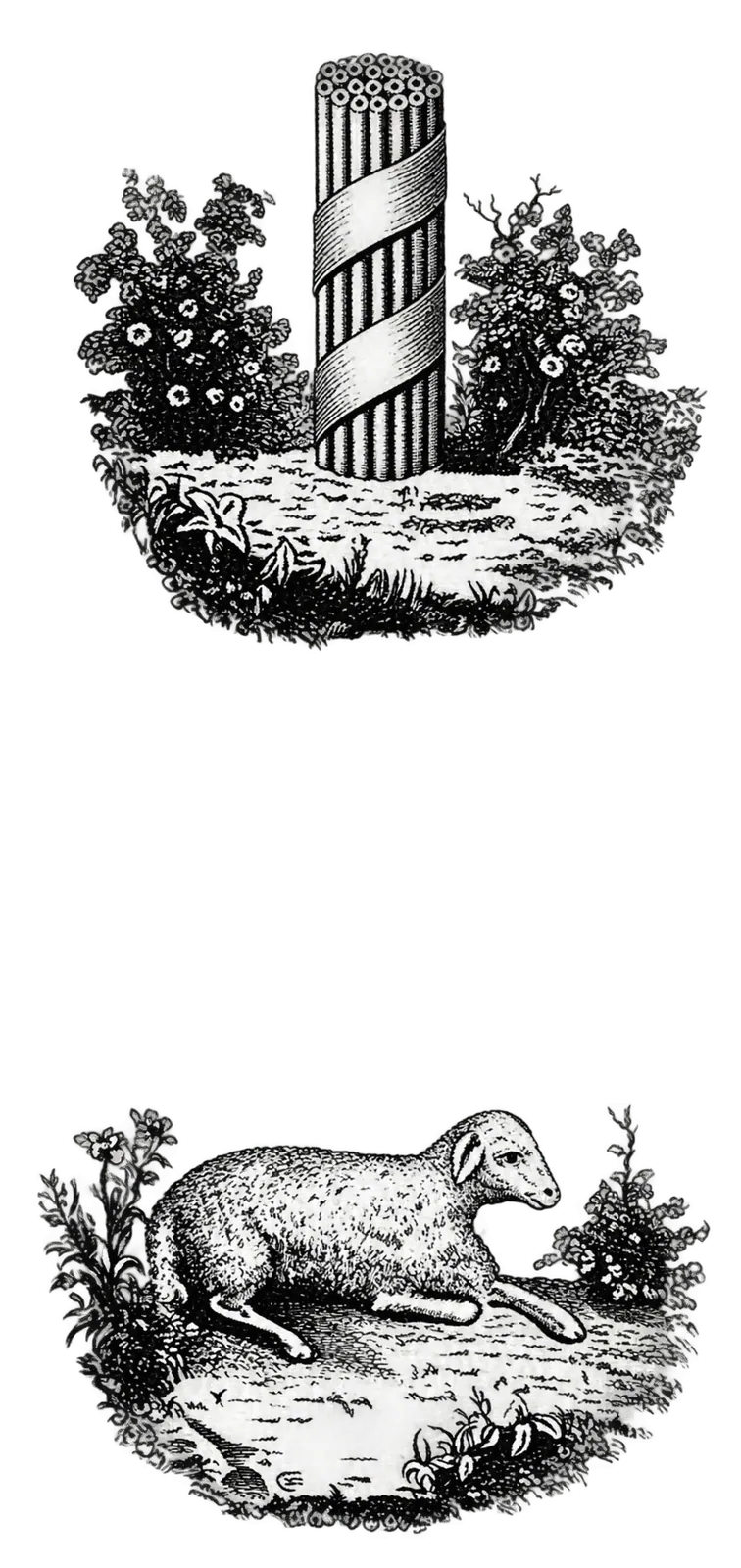
The Bundle of Sticks.—“‘In union is strength,’ is a common axiom. We must be united in this cause of Odd-Fellowship, not only in our corporate capacity, but in our DEEDS. A single individual, if he labor with a will, may accomplish much in the field of fraternity; but a host, united in solid phalanx in the service of benevolence, may revolutionize the world. If the two hundred thousand (this was years ago) Odd-Fellows we boast of in numbers were to go forth NOW, and put into practice what they profess—if they would labor with one heart and one mind in the highways and byways of life—how soon might their influence pervade the earth, crushing, withering, annihilating the demands of Avarice, and Lust, and Pride, and raising man to the high and holy estate for which his Master designed him! Brother, forget not your obligations. Wait not for others, but do your part, though you may be but one rod in the bundle.”
Quiver and Arrows.—“As the marksman prides himself on the certainty of his aim, so should we, in a higher and more noble sense, study to make our generous deeds sure. We must perform our good offices at random, but so regulate and direct them as to render them serviceable at the proper time, and place, and circumstance. Thus, unlike the Indian, who desires his bow and arrows buried with him, that he may possess them in the happy hunting-grounds where the Great Spirit dwells, let us hope that the odor of our benevolent actions shall precede us, and trust that the influence of those actions shall be felt and realized after all that is mortal of us shall have perished.”
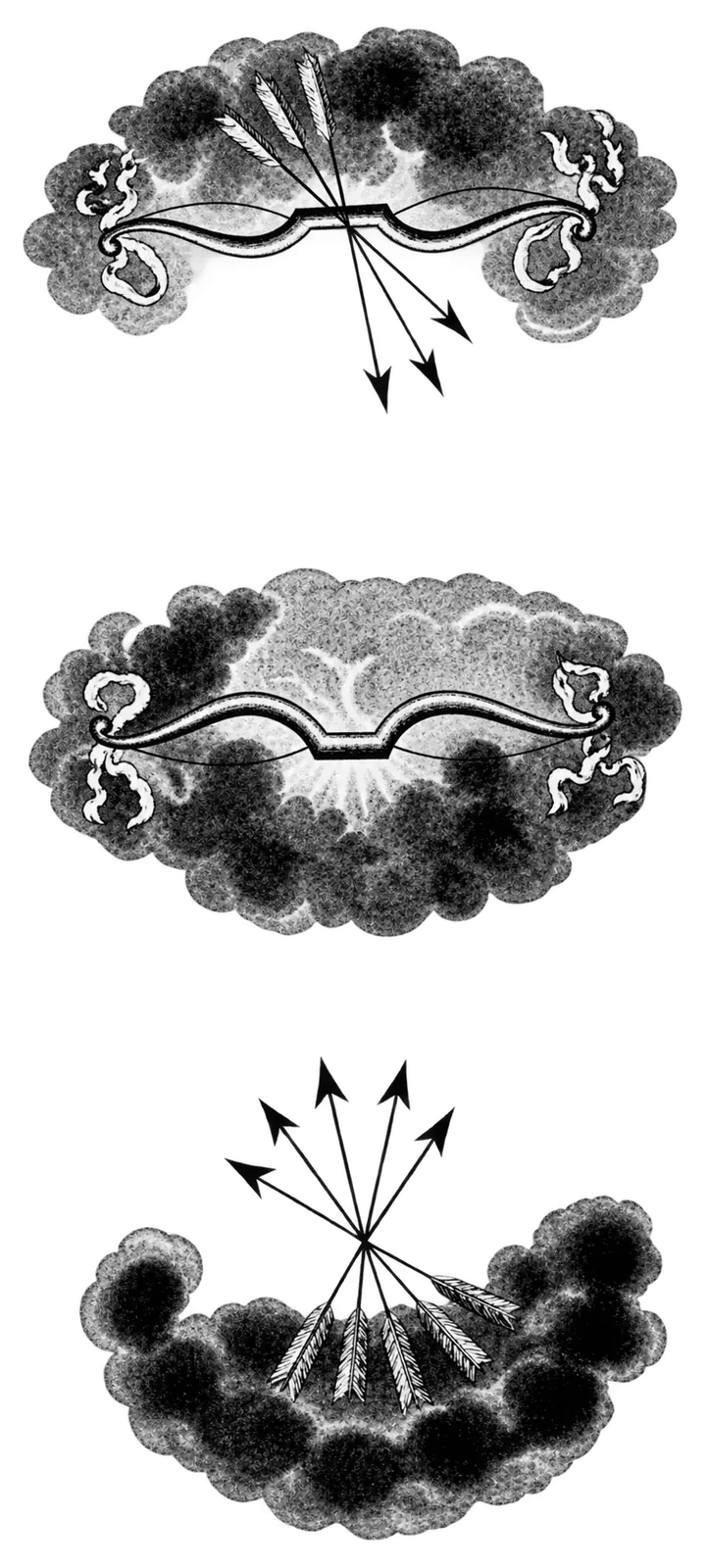
Moses’ Rod.—“As ‘the great lawgiver of the Jews’ received his authority and was directed by the Almighty, so may you, my brother, by the same authority and direction, go forth as a leader in the cause of the oppressed. Under such guidance you may smite with power and effect the high, thick walls of Prejudice which shut man away from his fellow; you may protect him from the enemies which would enslave and crush him, by teaching him to follow the example and practice the precepts which the Jewish leader exhibited and inculcated.”
The Dove.—“The messenger of Peace and Good-will of Promise and of Hope, what lot more happy—more desirable—than thine! ‘Like a tree planted by the rivers, that bringeth forth his fruit in his season, thy leaf shall not wither, and whatsoever thou doest shall prosper.’ Brother, be not wearied in thy progress. Go forth ever in the cause of Friendship—bear ever the olive-branch of Peace to the oppressed.”
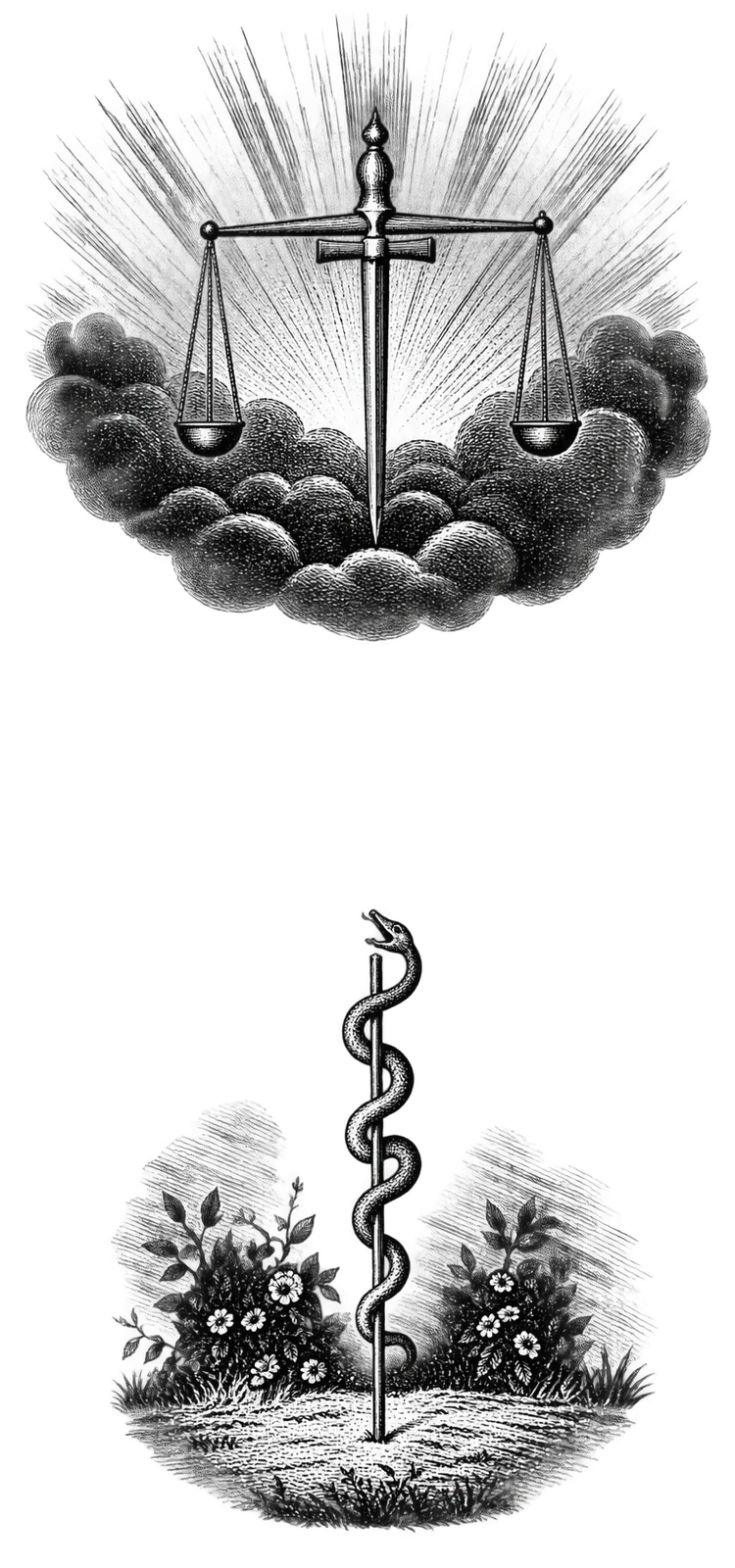
The Brazen Serpent.—“But whilst thou shouldst be harmless as the dove, thou shouldst also be wise as the serpent. Suffer no man—brother though he profess to be—to deceive thee by false tokens. All are not Odd-Fellows who take the name. All are not thy co-laborers who claim to be so. He who is selfish, or avaricious, or uncharitable, is NOT thy brother. Reform him, if thou canst, but discover not to him thy secrets. Do thy own work—make not him thy partner in it.”
The Ark of the Covenant.—“The ark of the covenant contained the sublimest instructions ever given to man. On these all just laws have been founded. On these have our laws been built. As those sacred deposits were the object of respect and reverence by the Jews, so likewise, my brother, honor thou the teachings thus far impressed on thy mind, and act in conformity with the lessons thou hast learned.”
The Scales and Sword.—“Let us weigh well and truly our conduct and our actions, and suffer the balance to be a just one. The spirit of Justice will not permit us to impose false balances. If we have erred, therefore, we must not screen ourselves, but repent. Nor should we screen other delinquents, however much our sympathy may be excited in their behalf. He is most merciful who enforces justice on the evil-doer, for it is for the general good; better one suffer than many.”
The Horn of Plenty.—“If thou art or shouldst become blessed with abundance, be thankful, not in words merely, but in DEEDS. If thou hast plenty and to spare and wouldst be happy, give of thy abundance in the cause of Benevolence. So shalt thou greatly aid in carrying out the noble designs of this Fraternity.”
The Bible.—“What you have been told concerning the sacred deposits of the ark of the covenant, might be appropriately repeated here. The Word of God, the Book of books, is the source of all true wisdom, Divine and human. It is a ‘lamp to our feet, a light to our path,’ and contains unerring directions and counsel for every phase, circumstance and condition of life. Study it, my brother.”
Sun, Moon, and Seven Stars.—“The sun is the emblem of power and vigor; the moon and stars are not only subordinate to it, but dependent upon it. TRUTH is our great light. If we, in the course of our pilgrimage here on earth, realize its power in our hearts, permit it to control our actions, and in our turn reflect its strength upon others’ hearts, we shall be the noblest benefactors that ever blessed humanity. We must, as Odd-Fellows, be sincerely wedded to TRUTH. For our union with her shall survive, not only earth, but Time, the conqueror of Death.”
The Budding-Rod.—“And the Lord spake unto Moses, saying, Speak unto the children of Israel, and take of every one of them a rod according to the house of their fathers, of all their princes according to the house of their fathers, twelve rods: write thou every man’s name upon his rod. And thou shalt write Aaron’s name upon the rod of Levi: for one rod shall be for the head of the house of their fathers. And thou shalt lay them up in the tabernacle of the congregation before the testimony, where I will meet with you. And it shall come to pass that the man’s rod whom I shall choose shall blossom: and I will make to cease from me the murmurings of the children of Israel, whereby they murmur against you. And Moses spake unto the children of Israel, and every one of their princes gave him a rod apiece, for each prince one, according to their fathers’ houses, even twelve rods: and the rod of Aaron was among their rods. And Moses laid up the rods before the Lord in the tabernacle of witness. And it came to pass, that on the morrow Moses went into the tabernacle of witness; and behold, the rod of Aaron for the house of Levi was budded, and brought forth buds, and bloomed blossoms, and yielded almonds.”
The Globe.—“The globe is the field of our labor. We should not pause in our efforts until the whole world shall be made happy. We should carry our Benevolence and Friendship into every corner of the wide earth, and into the remotest islands of the sea.”

The Hour-Glass and Scythe.—“While we have been thus pursuing this journey, which has brought us at length to the goal we set out to reach, the sands of our life have been falling, and we are nearer the ‘bourne whence no traveler returns.’ Old Time, with his unerring scythe, is on our track—we can not escape him. Let us now impress this truth—let us ENGRAVE it on our hearts—that there is not a moment to waste; that, in the brief probation allotted to us here on earth, the good or ill we accomplish is all of us that shall live among men.”
The Altar of Incense.—“Let thy offerings, brother, be submitted in all simplicity and purity of heart. Imitate the patriarchs. Worship thy Maker in spirit and in truth. Call on him frequently—thou hast need of His guidance. Approach His altar in the spirit of humility and of love, and ask his blessings, not only on thyself, but on thy neighbor. So shalt thou find favor in His sight, and insure His countenance and support.”
The Patriarch’s Tent.—“The patriarchs of old, who dwelt in tents, whose employment was that of shepherds, and who passed their lives in the inculcation of the social virtues, were a happy because they were a good people. Brother, imitate their pure example, and thou shalt find the contentment which they so richly enjoyed.”
The Three Pillars.—“Brother, have ‘Faith in God, Hope in immortality, and Charity to all mankind. ‘The greatest of these is Charity;’ for our Faith may be lost in sight; Hope ends in fruition; but Charity extends beyond the grave, through the boundless realms of eternity.’ The chief pillar of the temple we have reared is therefore Charity. Remember, then, that on this mainly depends our superstructure, and fail not, faint not in the practice of this Godlike virtue.”
